$238.00

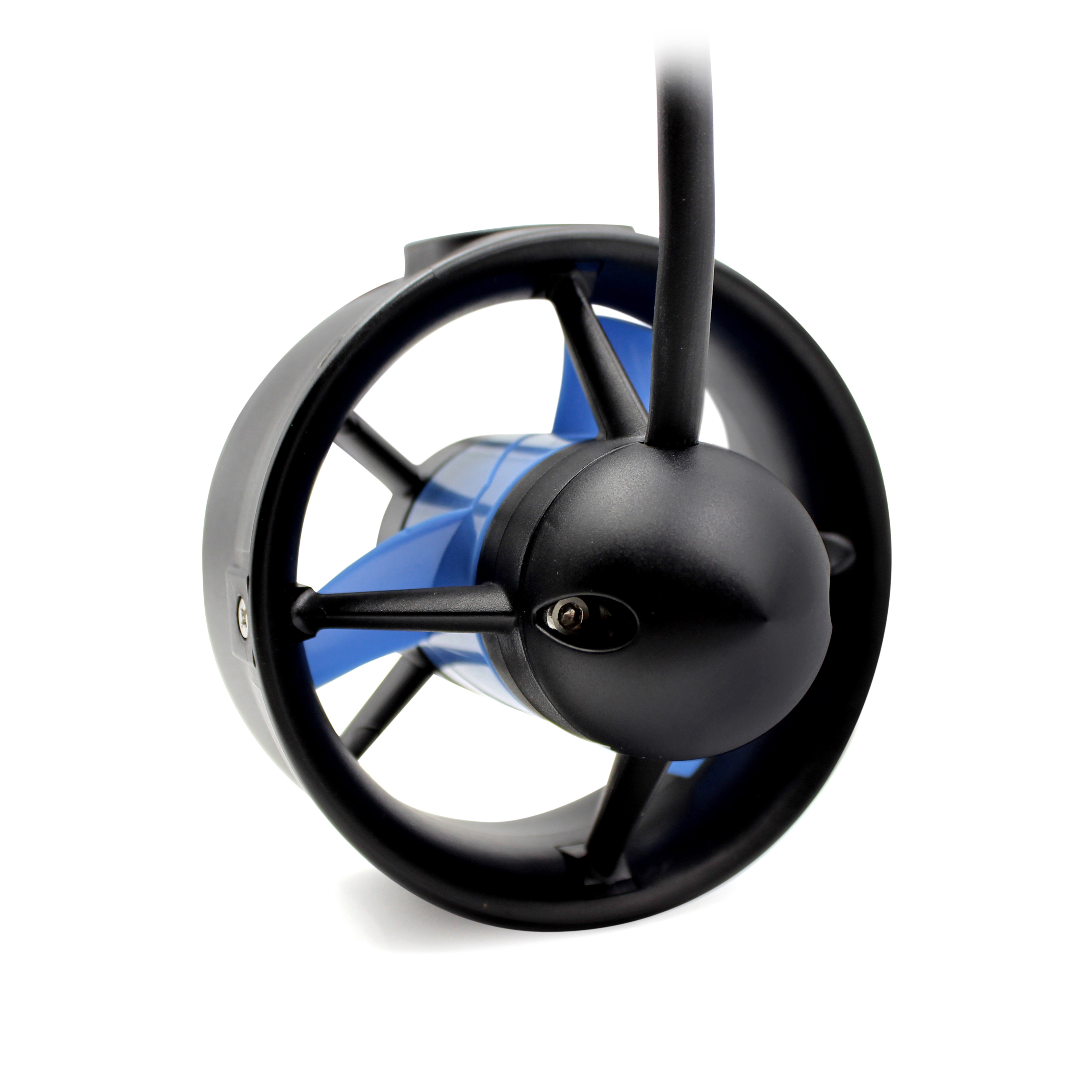
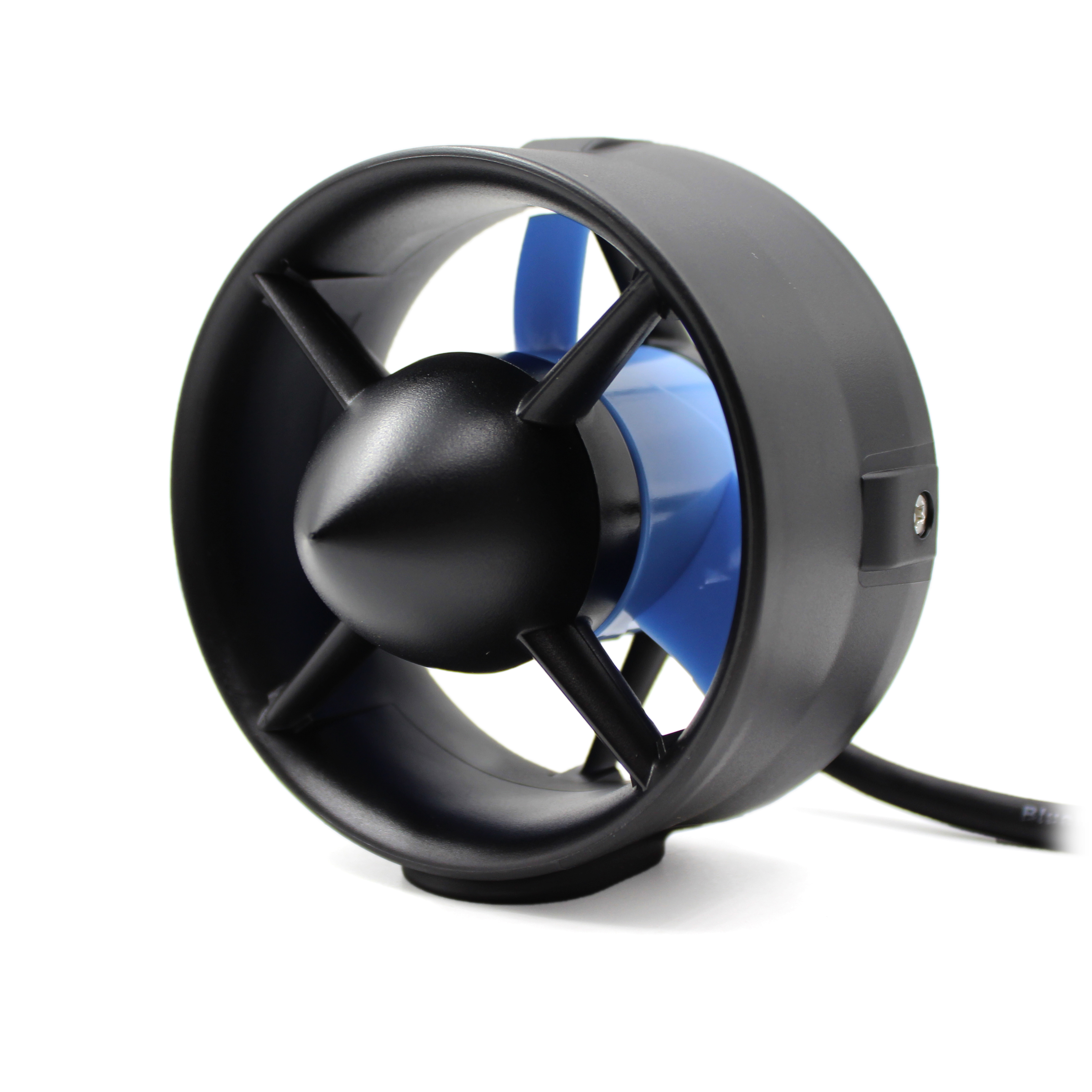
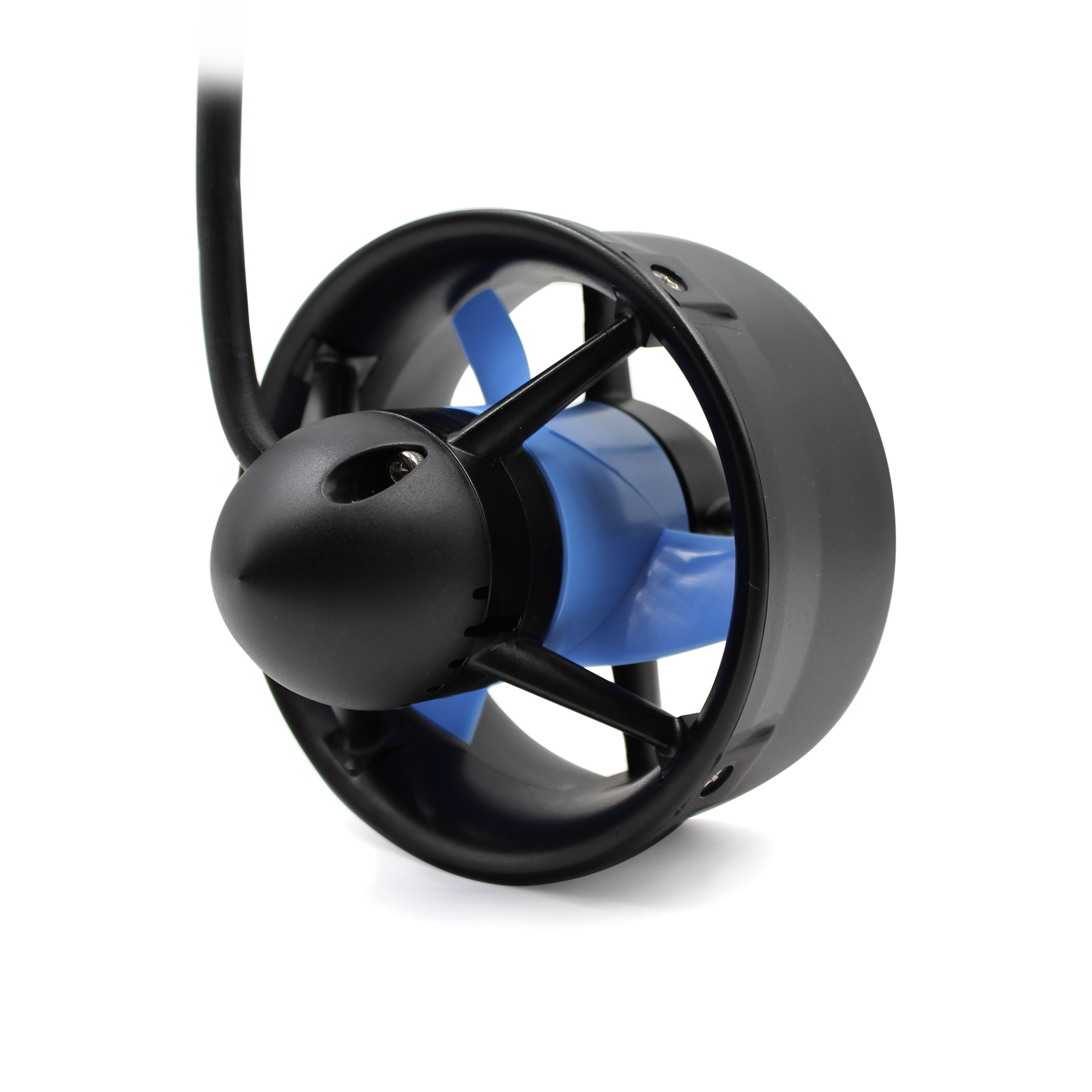
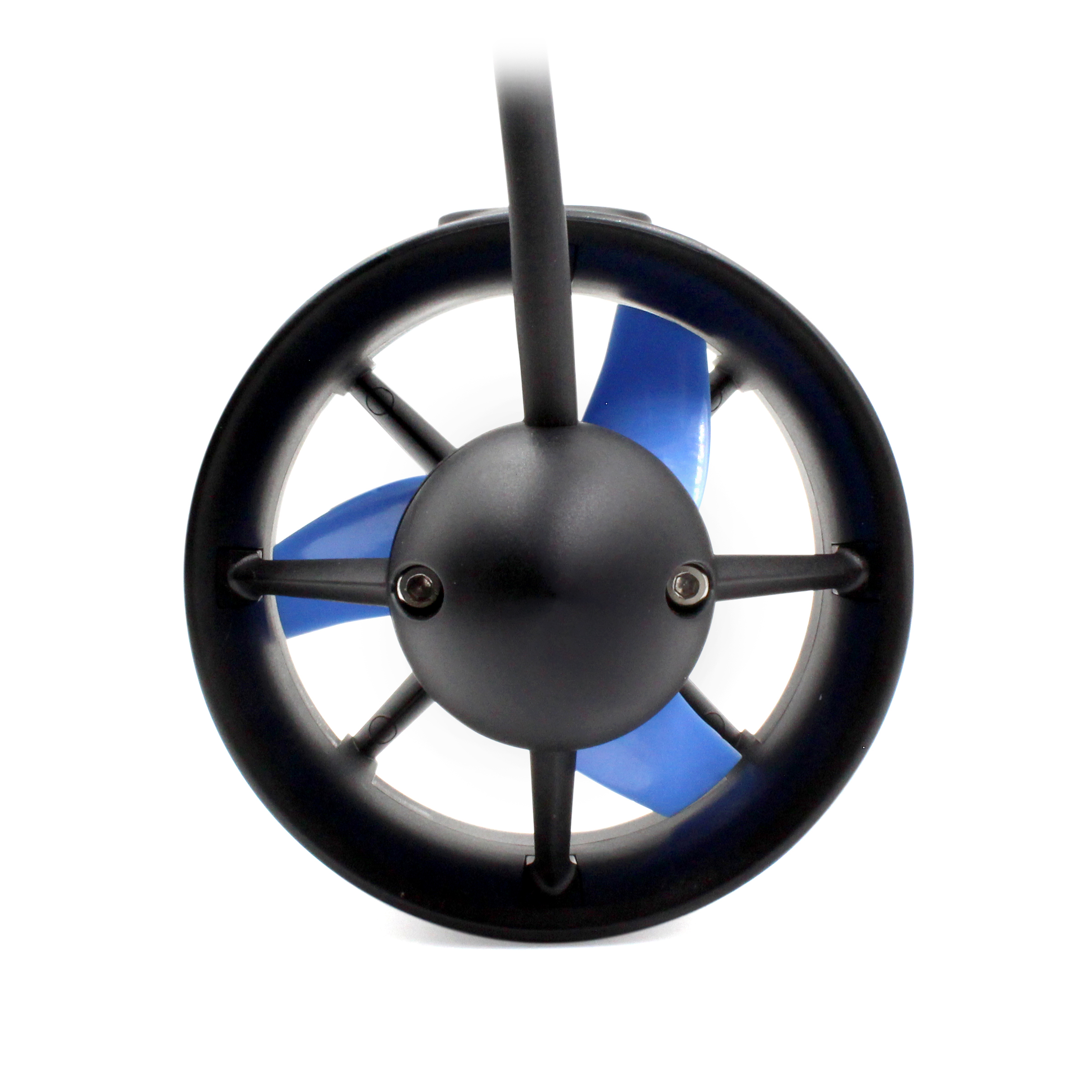
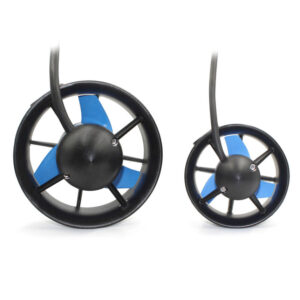
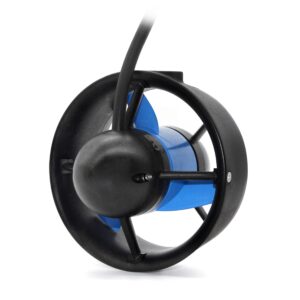
The T200 Thruster is the world’s most popular underwater thruster for ROVs, AUVs, surface vessels, and more! Its patented flooded motor design makes it powerful, efficient, compact, and affordable. The T200 is in use on thousands of marine robotic vehicles around the world including the BlueROV2.

Interested in customizations? Let us know!

Select options:

Quantity 1 - 9 10 - 24 25 - 49 50 - 149 150+
Price $200.00 $190.00 $180.00 $170.00 $160.00
SKU: BR-100545
HS Code: 8501.31.4000

Product Description

Our T200 Thruster was originally introduced in our 2014 Kickstarter campaign! Since then, it’s become the most popular underwater thruster in the world and there are thousands of them powering all sorts of marine ROVs, AUVs, boats, and even human-carrying vehicles!

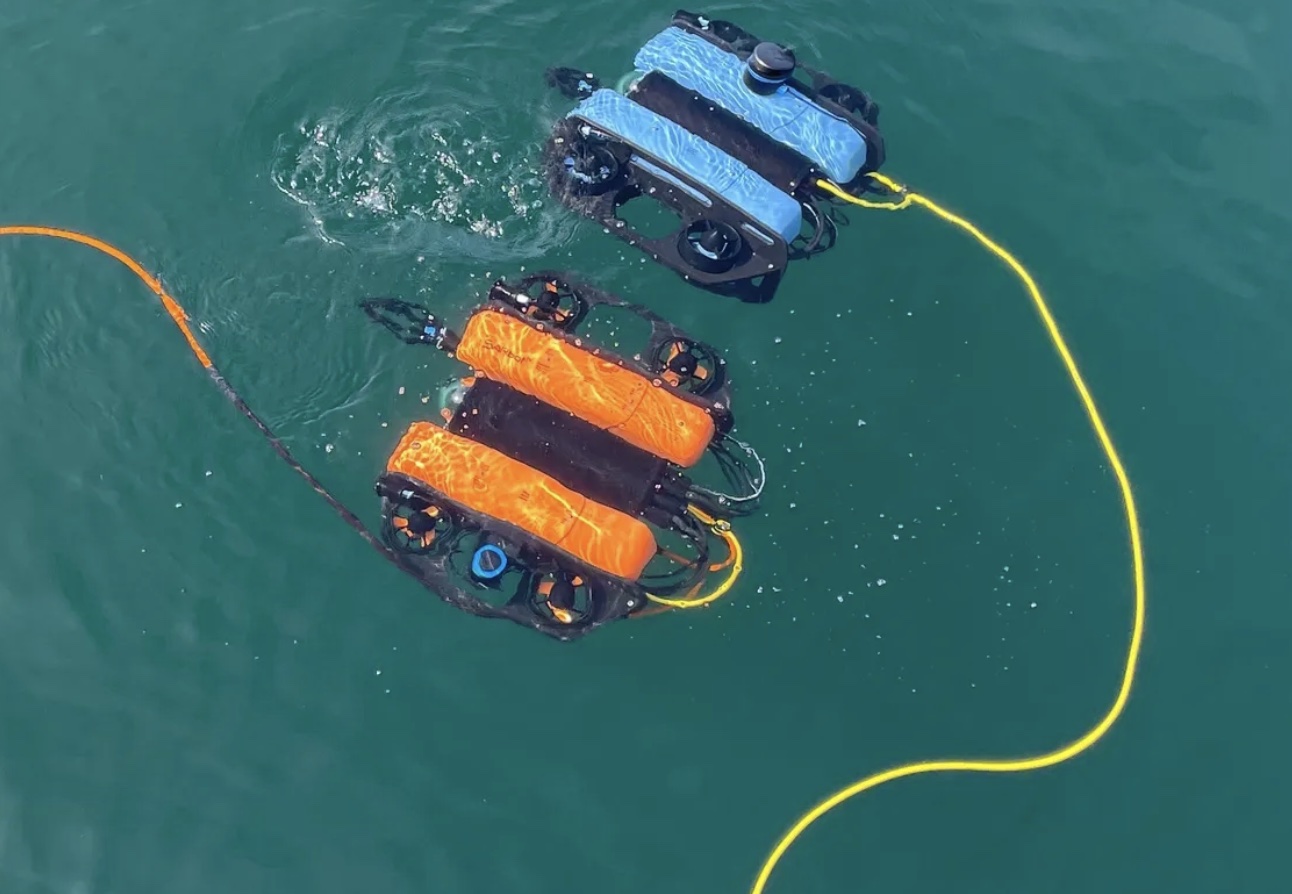
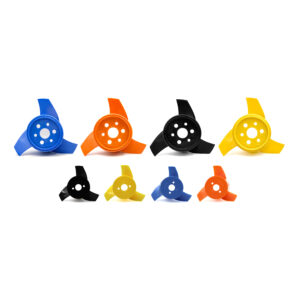
We also offer custom thrusters. From various cable lengths to different propeller colors, there are PLENTY of options. Tell us what your dreams are and we can see if it’s possible! Check out BlueLink‘s SARBot with orange propellers below.

Thruster Technology

The T200 Thruster uses our patented underwater thruster design consisting of a fully-flooded brushless motor with encapsulated motor windings and stator as well as coated magnets and rotor. The thruster body and propeller are made from tough polycarbonate plastic and the only exposed metal components are made from marine grade 316 stainless steel.

The fully-flooded design is unique compared to thrusters existing before the T200. It allows the motor to be water-cooled and the plastic bushings to be water-lubricated. It eliminates the need for shaft seals, magnetic couplings, and air- or oil-filled compartments, making the thruster naturally pressure tolerant. The design is compact and has a minimal number of parts so that we can offer it at an affordable price.

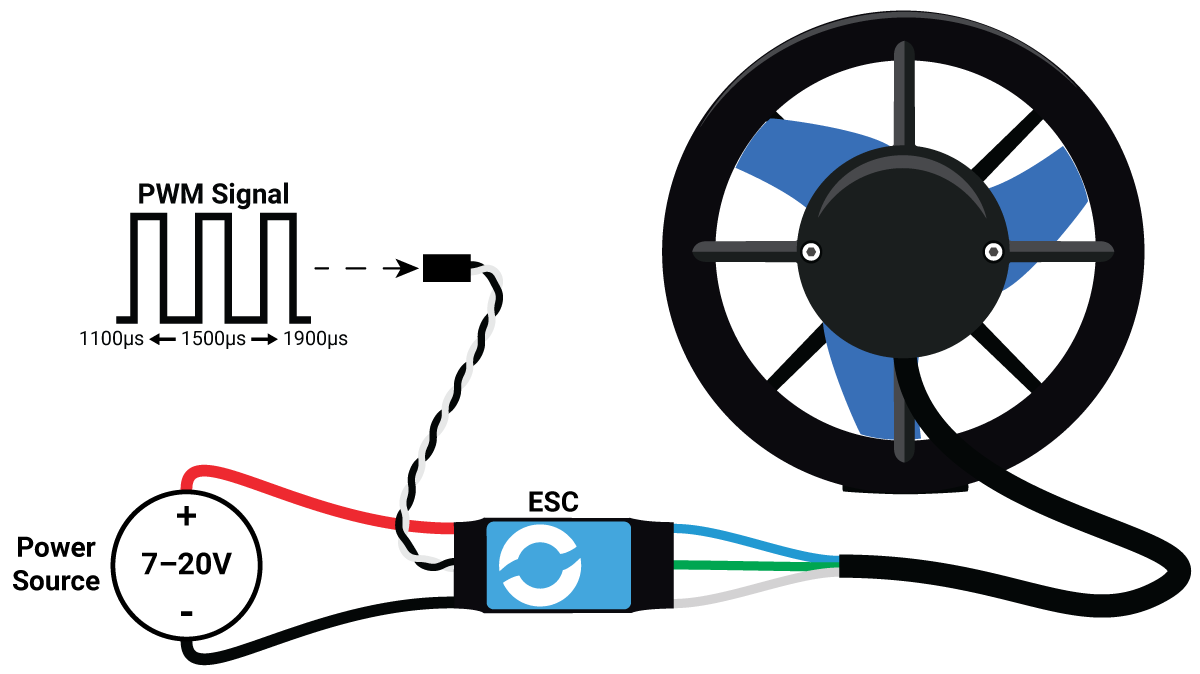
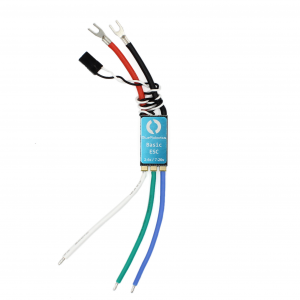
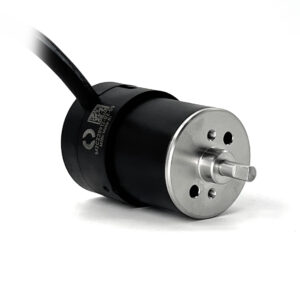
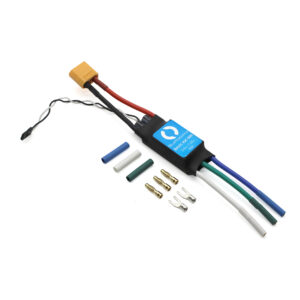
The core motor design is a three-phase brushless outrunner motor, similar to what you’d see on drones and RC airplanes, but optimized for underwater use. A sensorless brushless electronic speed controller (ESC) like our Basic ESC is required to run the thruster in all situations. It’s optimized to run at a voltage of 16v (such as a 4s lithium-ion battery pack), but can run at a range of voltages. Check out the detailed performance charts on the Technical Details tab for more information.

ROV, AUV, and Underwater Drone Thruster Applications

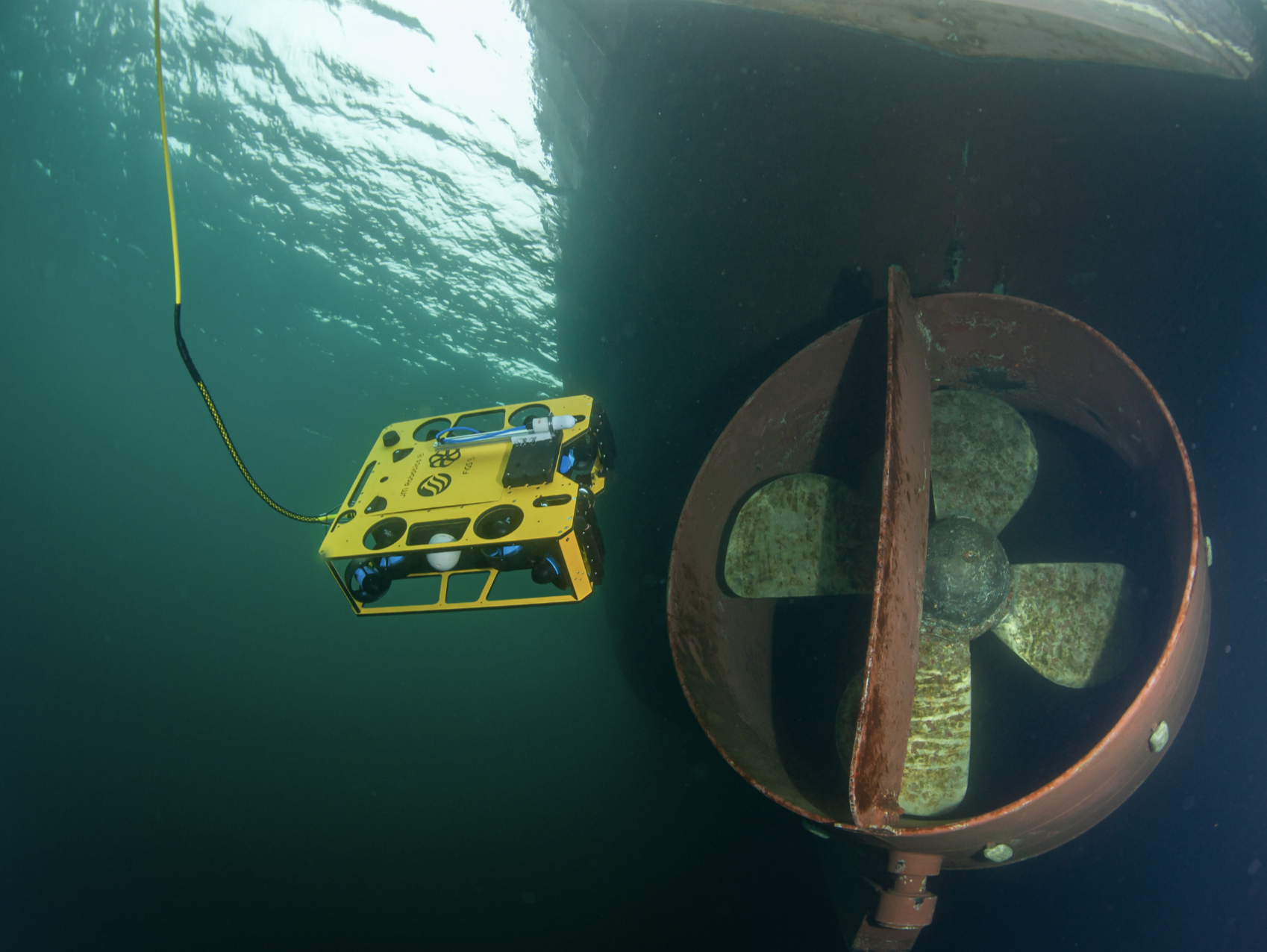
The T200 Thruster is used on a number of underwater ROVs, AUVs, and underwater drones including our flagship underwater ROV, the BlueROV2, as well as our Distributor JM Robotics‘ ROVs. The thrusters provide compact but powerful underwater propulsion on the ROV.

The thrusters are also used on AUV platforms, making autonomous underwater robotics an affordable possibility for researchers, scientists, and businesses.

The T200 Thruster powers a number of underwater drones designed to inspect, explore, and film underwater infrastructure, ships, aquaculture pens, and shipwrecks.

MATE ROV Competition 2023 World Championship

MATE, RoboSub, and Robotics Competition Applications

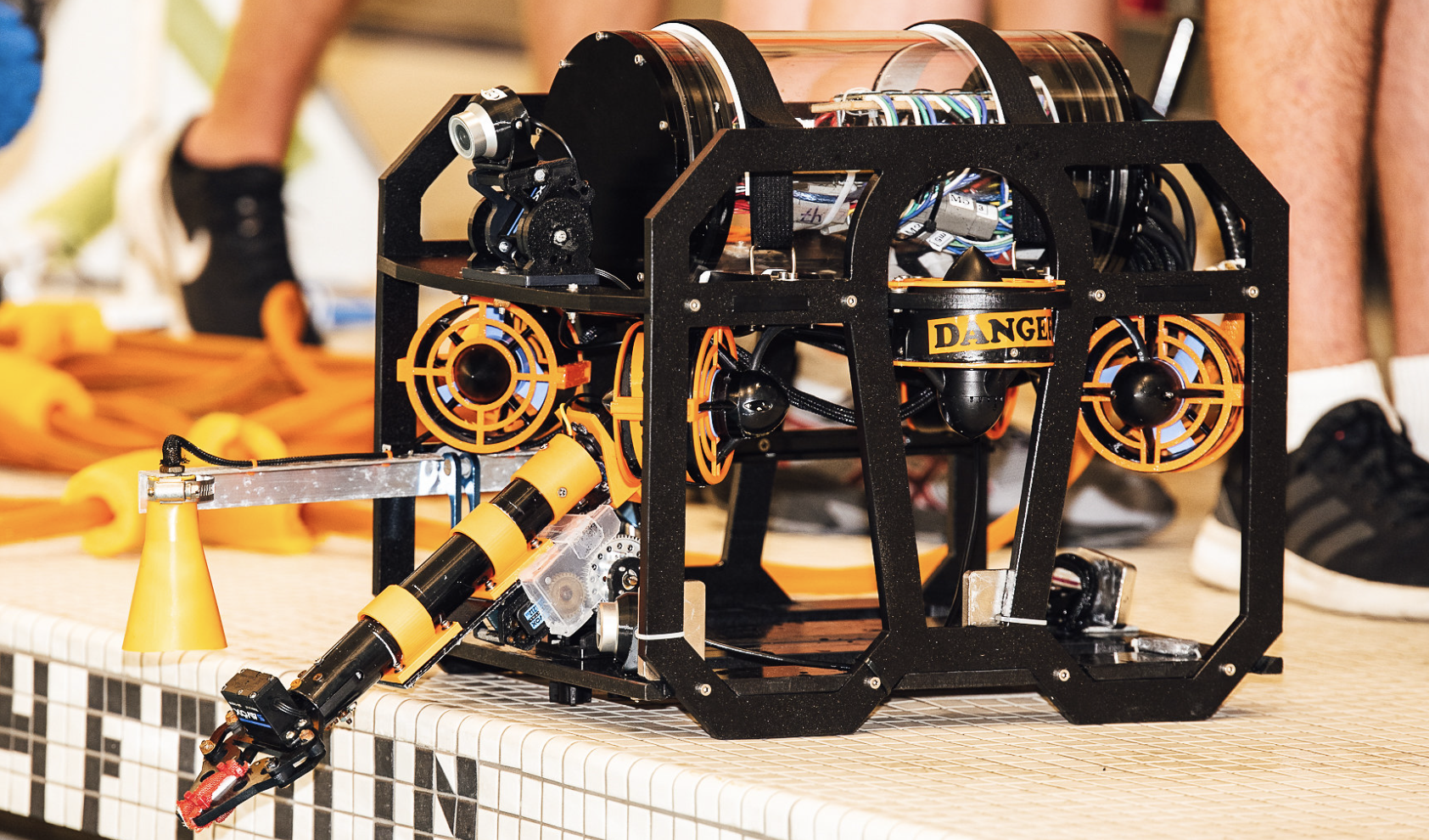
In addition to commercial and research applications, the T200 Thruster is the thruster of choice for MATE ROV competitions, the RoboSub AUV competition, and other competitions including RoboBoat, European Robotics League (ERL), and the Singapore AUV Challenge (SAUVC). The T200 provides an affordable and reliable thruster option to replace the bilge pump motors and expensive thrusters used in the past.

USVs, Kayaks, and SUPs Thruster Applications

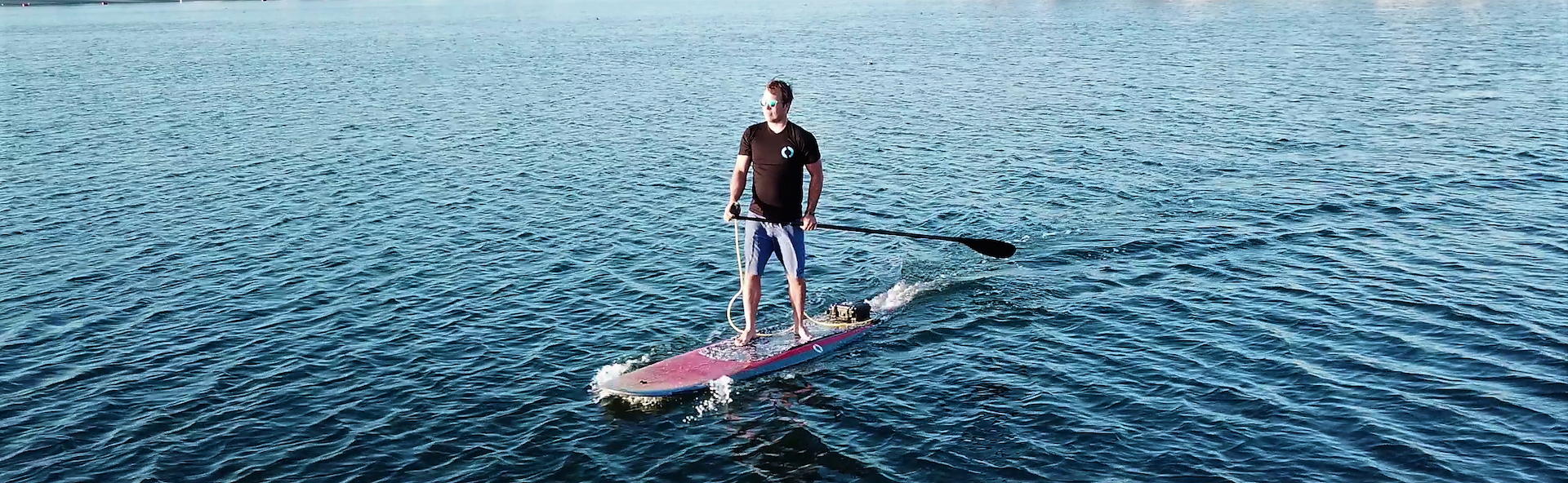
The T200 Thruster can propel robotic unmanned surface vessels (USVs) and flexible mounting options make it easy to turn just about anything that floats into a USV! We’ve seen it used on anything from a boogie board to a commercial grade survey vessel.

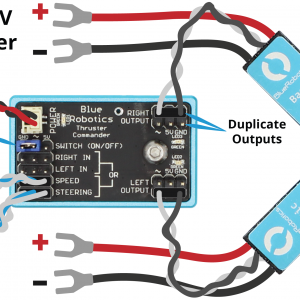
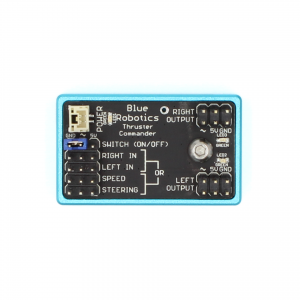
Combined with a battery, ESC, and the Thruster Commander, it’s easy to use on a kayak or stand-up paddleboard (SUP) as well! Two T200s on a paddleboard will get it moving at over 3 knots!

Using the T200 Thruster

The T200 Thruster comes ready to use and includes both clockwise and counterclockwise propellers. In addition to the thruster, you need a speed controller like our Basic ESC, a power source like our battery, and a signal source, such as our Thruster Commander, an RC radio receiver, or a microcontroller like the Arduino or Raspberry Pi.

There is a wealth of available technical information, charts, code examples, and tutorials on the Technical Details and Learn sections of this page as well as support through our online forum community. There you can find users doing all sorts of interesting things ranging from generative ROV design to freediving jet boots to lionfish hunting robots!

We’re excited to see what YOU do with it!

Product Description

Our T200 Thruster was originally introduced in our 2014 Kickstarter campaign! Since then, it’s become the most popular underwater thruster in the world and there are thousands of them powering all sorts of marine ROVs, AUVs, boats, and even human-carrying vehicles!

We also offer custom thrusters. From various cable lengths to different propeller colors, there are PLENTY of options. Tell us what your dreams are and we can see if it’s possible! Check out BlueLink‘s SARBot with orange propellers below.

Thruster Technology

The T200 Thruster uses our patented underwater thruster design consisting of a fully-flooded brushless motor with encapsulated motor windings and stator as well as coated magnets and rotor. The thruster body and propeller are made from tough polycarbonate plastic and the only exposed metal components are made from marine grade 316 stainless steel.

The fully-flooded design is unique compared to thrusters existing before the T200. It allows the motor to be water-cooled and the plastic bushings to be water-lubricated. It eliminates the need for shaft seals, magnetic couplings, and air- or oil-filled compartments, making the thruster naturally pressure tolerant. The design is compact and has a minimal number of parts so that we can offer it at an affordable price.

The core motor design is a three-phase brushless outrunner motor, similar to what you’d see on drones and RC airplanes, but optimized for underwater use. A sensorless brushless electronic speed controller (ESC) like our Basic ESC is required to run the thruster in all situations. It’s optimized to run at a voltage of 16v (such as a 4s lithium-ion battery pack), but can run at a range of voltages. Check out the detailed performance charts on the Technical Details tab for more information.

ROV, AUV, and Underwater Drone Thruster Applications

The T200 Thruster is used on a number of underwater ROVs, AUVs, and underwater drones including our flagship underwater ROV, the BlueROV2, as well as our Distributor JM Robotics‘ ROVs. The thrusters provide compact but powerful underwater propulsion on the ROV.

The thrusters are also used on AUV platforms, making autonomous underwater robotics an affordable possibility for researchers, scientists, and businesses.

The T200 Thruster powers a number of underwater drones designed to inspect, explore, and film underwater infrastructure, ships, aquaculture pens, and shipwrecks.

MATE ROV Competition 2023 World Championship

MATE, RoboSub, and Robotics Competition Applications

In addition to commercial and research applications, the T200 Thruster is the thruster of choice for MATE ROV competitions, the RoboSub AUV competition, and other competitions including RoboBoat, European Robotics League (ERL), and the Singapore AUV Challenge (SAUVC). The T200 provides an affordable and reliable thruster option to replace the bilge pump motors and expensive thrusters used in the past.

USVs, Kayaks, and SUPs Thruster Applications

The T200 Thruster can propel robotic unmanned surface vessels (USVs) and flexible mounting options make it easy to turn just about anything that floats into a USV! We’ve seen it used on anything from a boogie board to a commercial grade survey vessel.

Combined with a battery, ESC, and the Thruster Commander, it’s easy to use on a kayak or stand-up paddleboard (SUP) as well! Two T200s on a paddleboard will get it moving at over 3 knots!

Using the T200 Thruster

The T200 Thruster comes ready to use and includes both clockwise and counterclockwise propellers. In addition to the thruster, you need a speed controller like our Basic ESC, a power source like our battery, and a signal source, such as our Thruster Commander, an RC radio receiver, or a microcontroller like the Arduino or Raspberry Pi.

There is a wealth of available technical information, charts, code examples, and tutorials on the Technical Details and Learn sections of this page as well as support through our online forum community. There you can find users doing all sorts of interesting things ranging from generative ROV design to freediving jet boots to lionfish hunting robots!

We’re excited to see what YOU do with it!

  • 1 x T200 Thruster
  • 1 x Clockwise propeller (installed on thruster)
  • 1 x Counterclockwise propeller

Specifications

ParameterValue
Performance
Full Throttle FWD/REV Thrust @ 12 V3.71 / 2.92 kg f8.2 / 6.4 lb f
Full Throttle FWD/REV Thrust @ Nominal (16 V)5.25 / 4.1 kg f11.6 / 9.0 lb f
Full Throttle FWD/REV Thrust @ Maximum (20 V)6.7 / 5.05 kg f14.8 / 11.1 lb f
Minimum Thrust0.02 kg f*0.05 lb f*
Electrical
Operating Voltage7–20 volts
Full Throttle Current (Power) @ 12 V17 Amps (205 Watts)
Full Throttle Current (Power) @ Nominal (16 V)24 Amps (390 Watts)
Full Throttle Current (Power) @ Maximum (20 V)32 Amps (645 Watts)
Physical
Length113 mm4.45 in
Diameter100 mm3.9 in
Wetted MaterialsPolycarbonate
Epoxy
Stainless steel 316
Plastic
Polyurethane
Weight in Air (with 1m cable)344 g0.76 lb
Weight in Water (with 1m cable)156 g0.34 lb
Propeller Diameter76 mm3.0 in
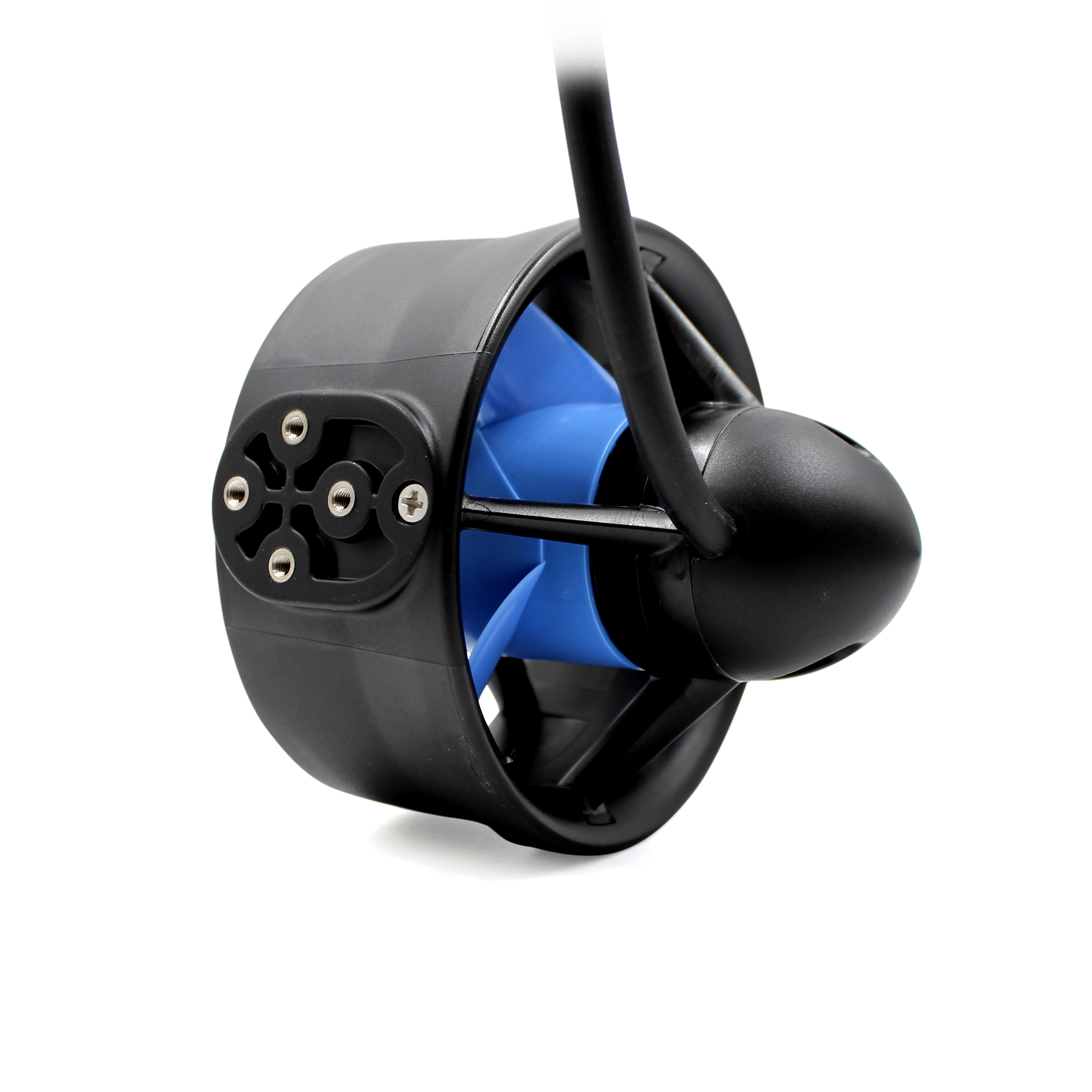
Mounting Hole ThreadsM3 x 0.5
Mounting Hole Spacing19 mm0.75 in
Cable
Cable UsedBR-100997
Cable Length (Standard T200)1.0 m39 in
Cable Length (T200 BlueROV2 Spare)0.71 m28 in
Conductor Gauge16 AWG
Compatible WetLink PenetratorWLP-M10-6.5MM-LC
*Values limited by ESC used to drive thruster.

Note that nominal operation at 12–16 V is recommended for the best balance of thrust and efficiency, though operation at up to 20 V is allowable. Exceeding 20 V is not within the rating and not recommended, please see here for more information.

For more detailed performance specifications, including thrust, RPM, power, and efficiency at various throttle levels and supply voltages from 10-20 V, please see the performance charts below.

Performance Charts

Click on the legend to hide or show the data set for each voltage. All the raw data and notes on the testing procedure used to generate these charts can be downloaded here:

T200-Public-Performance-Data-10-20V-September-2019 (.xlsx)

Thrust at 10–20 V


Current Draw at 10–20 V


Efficiency at 10–20 V


Thrust and Power at 10–20 V


RPM at 10–20 V

2D Drawings
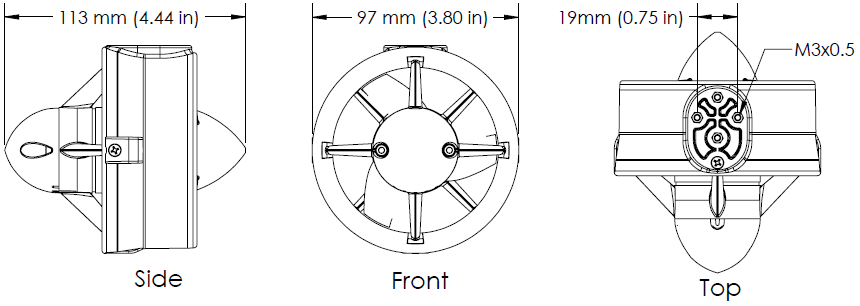
 Drawing

3D Models

T200-THRUSTER-R1 (.zip)

Revision History

21 May 2024

  • Nose cone material changed to 10% glass-filled polycarbonate

29 June 2023

  • T200-THRUSTER-R2-RP SKU changed to BR-100545

14 March 2023

  • Serial number laser marking implemented

12 February 2021

  • R2 - Initial release
  • Changed thruster cable conductors from 18 AWG to 16 AWG

08 November 2019

  • Changed stator from being epoxy coated to fully potted
  • Added cooling holes to propellers

15 September 2019

  • Changed finish of polycarbonate components from glossy to matte

19 September 2014

  • R1 - Initial release

Quick Start

1. Connect thruster wires to ESC motor phase wires.

2. Connect the ESC to a power source.

3. Connect the ESC signal wire to a signal source.

4. Send a signal and the thruster will start spinning. That’s it.

Important Notes

Always practice caution when you’re working with electricity in water.
Keep body parts away from the thruster inlet and outlet to avoid injury. Always practice caution with the spinning blades of the propeller.
Do not operate the thruster for more than 10 seconds outside of water (while dry). The bearings require water for lubrication and may be damaged if the thruster is operated for an extended period of time while dry.
Avoid sucking seaweed or other objects into the thruster to avoid damage.
Most threadlockers are not chemically compatible with polycarbonate and will damage the thrusters if used on any of the screws. Only use a threadlocker that is chemically compatible with polycarbonate on the mounting screws if necessary.
A clicking sound or noisy thruster is normal, especially when operated while dry. Most noise and vibration go away once the thruster is operated in water.

Guides

Thruster User Guide
Learn how to operate, service, and troubleshoot your T200 or T500 thruster.
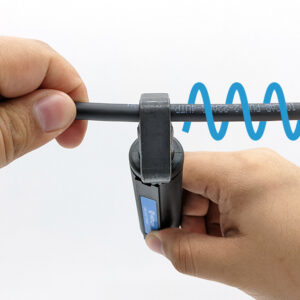
Cable Stripping
Learn how to properly strip cables for use with WetLink Penetrators!
Guide to the Thruster Commander
Get thrusters up and running quickly or create a manned thruster project!

Relevant Forum Categories

Blue Robotics Forums - Thrusters And Motors

Featured Forum Posts